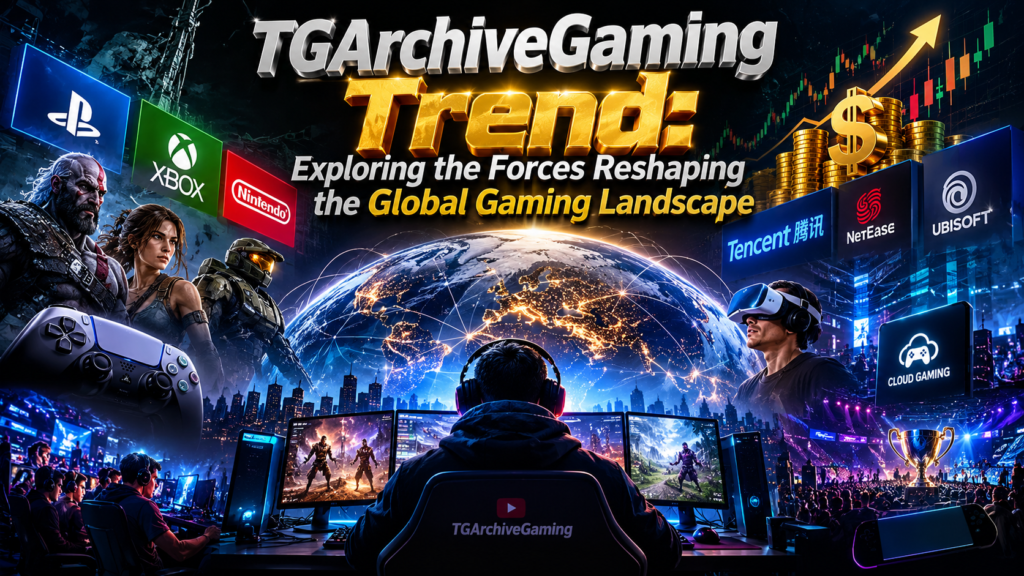
Every few years, gaming quietly changes direction, and most people only notice once it has already happened. Right now, one of those shifts is under way. The TGArchiveGaming Trend describes a growing pull toward archives, memory, and community: players digging into gaming’s past while the industry races toward its future. These two movements look like opposites, yet together they are reshaping how games are made, played, and kept alive.
What the TGArchiveGaming Trend Really Means
At its core, the TGArchiveGaming Trend is about a change in how people relate to games. A game used to be something you bought, finished, and shelved. Today it is something you revisit, document, discuss, and protect. Archives of old titles, fan-run databases, recorded playthroughs, and community wikis have become as important to gaming culture as the releases themselves.
That matters because it shifts power. Players are no longer only consumers. They are curators.
Nostalgia Has Become a Serious Market Force
Ask a developer a decade ago whether old games would drive new revenue, and you would have gotten a polite shrug. Now remasters, re-releases and “classic” collections arrive constantly, and studios treat them as strategy rather than an afterthought.
Part of the reason is simple. The generation that grew up on early consoles and arcade cabinets now has disposable income and strong feelings. Under the TGArchiveGaming Trend, nostalgia is not just sentiment. It is a measurable demand that shapes what gets funded and what gets rebuilt.
Gaming Fun with Friends
Gaming feels much better when you share it with friends. Playing together in multiplayer games builds teamwork, sharpens your skills, and makes every match twice as enjoyable. This is why TGArchiveGaming tips recommends playing with your friends as a team.
Cloud and Mobile: Gaming Without Borders
While some players look backward, the infrastructure is racing forward. Cloud gaming and mobile platforms have removed the old gatekeepers of expensive hardware and long downloads. In many regions, including much of South Asia, the phone is the primary gaming device, not the console.
This is a quiet but important part of the global gaming landscape. When access gets cheaper and easier, the audience stops being a niche. It becomes everyone, and everyone brings different tastes, languages, and expectations. Studios that ignore this will build for a shrinking room.
Communities Are the New Publishers
Here is where the TGArchiveGaming Trend gets genuinely interesting. Communities now do work that publishers once guarded: translating games, fixing bugs, running tournaments, building mods, and writing the guides that decide whether a newcomer sticks around.
A strong community can keep a game alive for years after its official support ends. It can also kill a launch within hours if trust is broken. Any studio planning a release today needs to treat its community as a partner, not an audience.
Streaming and Content Creation
Love gaming? Start your own channel and let others see what you can do. According to TGArchiveGaming tips, sharing it with your friends is a good first step, because it helps you build a new community and creates chances to earn along the way.
The Preservation Problem Nobody Likes Talking About
Digital storefronts are convenient, but convenience has a cost. Games can be delisted, servers can shut down, and online-only titles can vanish completely. Unlike a book or a film, a game often depends on a whole ecosystem to function.
This is the uncomfortable center of the TGArchiveGaming Trend. Preservation advocates argue that if a cultural medium can disappear with a server switch, it was never really owned in the first place. Whatever your view on the legal questions, the conversation itself is now impossible to ignore.
What This Means for Developers and Players
For developers, the practical lessons are fairly clear:
- Build for longevity, not just launch week.
- Invest in community tools early, such as mod support, clear documentation, and open feedback channels.
- Think about what happens to your game when the servers go quiet.
For players, the shift is smaller but real. Support the games you love in ways that last, join communities that document and protect them, and pay attention to how and where you buy.
Where the Trend Goes Next
Expect the line between “old” and “new” to blur further. Classic games will keep returning with modern polish, new releases will lean on community input from day one, and conversations about ownership and access will get louder, not quieter. Regions that were once treated as secondary markets will push the direction of the industry more than anyone predicted.
Final Thoughts
The TGArchiveGaming Trend is not a single event or a buzzword. It is a slow, steady realignment: players valuing memory, communities holding real influence, and technology widening who gets to play. The studios and creators who understand this early will not just ride the wave. They will help decide where it lands.