Here’s something most people don’t want to hear: that free VPN you downloaded last week is probably selling your data right now. Not might be. Probably is.
The security software market pulls in over $172 billion annually. Yet millions of users still grab whatever free tool pops up first in their app store search. There’s a disconnect here, and it’s worth understanding why free security tools often create the exact problems they claim to solve.
What “Free” Actually Costs You
Running any security application takes real money. Servers aren’t cheap. Neither are developers, customer support reps, or the lawyers who handle compliance paperwork. So when a company offers its product for nothing, that money has to come from somewhere.
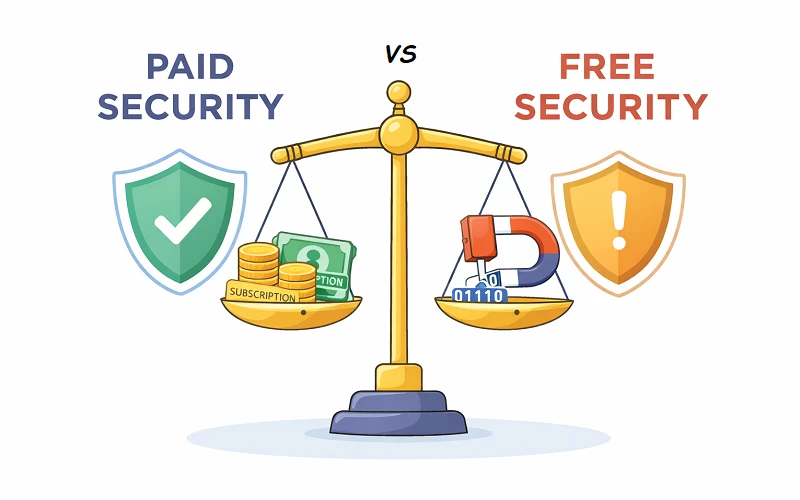
Usually, it comes from you. About 38% of free VPN apps contain malware or grab way more permissions than they need. They’re hoovering up your browsing history, location pings, and device info, then packaging that data for ad networks and brokers. The whole thing is kind of absurd when you think about it: you download privacy software that makes money by invading your privacy.
Paying for a service like CometVPN paid VPN service sidesteps this problem entirely. The company makes money from subscriptions, so there’s no incentive to monetize your personal information on the side.
And then there’s the performance issue. Free tiers cap your speeds at maybe 2-5 Mbps and give you 500MB of data per month. That’s about half an hour of Netflix before you’re cut off. Kaspersky’s security researchers have pointed out how these restrictions push people toward sketchy workarounds that make their security situation even worse.
Why Good Security Tools Cost Real Money
Let’s talk numbers for a second. One decent server in a proper data center runs $500 to $1,500 monthly. A VPN provider with global coverage operates thousands of these things across 50+ countries. That adds up fast.
Staffing costs hit hard too. Forbes noted that cybersecurity professionals average over $120,000 in annual salary. You need network engineers, crypto specialists, support teams, compliance officers. None of them work for free.
Then there’s regulatory stuff. GDPR compliance alone costs mid-sized companies somewhere between $1 million and $3 million to set up properly. Operating across multiple countries means keeping lawyers on retainer to track constantly changing data laws.
A $10 monthly subscription spread across 100,000 users covers all of this. The math works. With free products, it doesn’t.
Trust Isn’t Complicated (But People Make It So)
Three things determine whether you should trust security software: can it actually do the job, does its business model align with protecting you, and has it delivered on past promises?
Free tools usually fail at least two of these. Technical capability takes constant investment. Encryption standards change. Server networks need expansion. Threat databases require 24/7 monitoring. Companies without steady income can’t keep pace.
Business incentives matter more than people realize. Harvard Business Review research makes this point clearly: companies optimize for whatever generates their revenue. Subscription-funded services optimize for keeping customers happy. Ad-funded services optimize for collecting marketable data. It’s really that simple.
Track records tell you whether promises mean anything. Established paid services pay for independent security audits and publish transparency reports. Most free alternatives skip that expensive step entirely (no surprise there).
Picking Security Tools That Actually Work
Not every paid product deserves your money. And some free tools are genuinely okay for basic use. The trick is knowing what to look for.
Start with the business model question. How does this company make money? If the answer isn’t obvious from the pricing page, read the privacy policy. Then read the terms of service. Red flags tend to hide in boring legal documents.
Third-party audits matter. When a company invites outside security firms to examine its code and infrastructure, that’s a real investment (we’re talking tens of thousands of dollars). It signals they’re confident enough to let strangers poke around.
Support structure tells you a lot too. Paid services usually offer live chat, email support, and real documentation. Free versions give you a FAQ page and good luck. When something breaks at 2am, that difference matters.
Where This Leaves You
Look, budget constraints are real. Some free security tools are perfectly fine for casual browsing. But treating all free options as equal to paid alternatives ignores how these companies actually operate.
The irony is that people most vulnerable to security threats often pick free tools because they seem like the smart financial move. They’re not. Spending $5 to $15 monthly on verified security software removes the guesswork and eliminates the conflict of interest that comes standard with ad-supported products.