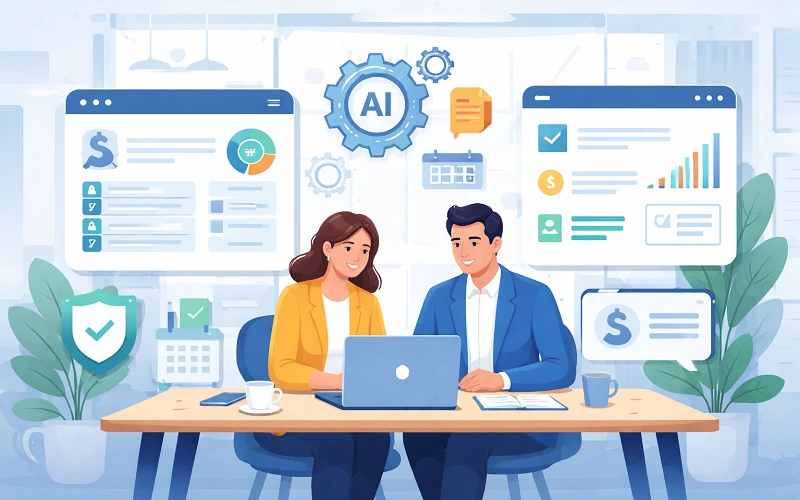
In an increasingly digital business landscape, companies are making significant strides in upgrading their payroll operations to achieve greater efficiency, compliance, and employee engagement. Modern advances in artificial intelligence (AI) and machine learning (ML) are revolutionizing the way businesses approach payroll.
Leveraging these technologies, today’s payroll software transforms traditional payroll processes, often plagued by manual routines and paperwork, into robust engines of productivity, transparency, and insight. Employers embracing smart payroll systems streamline not only their pay cycles but also redefine their approach to workforce management, making it easier to adapt to evolving organizational needs.
Implementing automated payroll solutions significantly enhances operational efficiency by reducing manual input, minimizing entry errors, and ensuring compliance with complex labor regulations. This automation enables HR teams to focus on higher-value tasks, such as talent development and employee engagement.
As advanced payroll technology becomes crucial for competitiveness, centralizing payroll within an HR technology hub enhances data visibility and collaboration. Additionally, modern payroll systems offer advanced analytics that reveal workforce trends and identify inefficiencies, ultimately fostering a more agile and proactive workplace.
Automation and Efficiency
For decades, traditional payroll work has been synonymous with manual labor, requiring HR professionals to spend countless hours entering employee data, performing complex calculations, and diligently double-checking each figure. Not only was this process time-consuming, but it also left ample room for human error that could affect employees’ pay and organizational compliance.
Today, smart payroll systems automate nearly every core process, calculating wages, deducting taxes, processing reimbursements, and generating reports so companies can process hundreds or even thousands of payroll transactions accurately in just a few seconds. Advanced AI algorithms can automatically detect inconsistencies or errors, flagging them for human review if necessary and greatly reducing the need for tedious oversight.
Businesses adopting AI-powered payroll can cut processing errors by as much as 80 percent, delivering direct financial benefits while also saving precious time for HR and finance professionals.
Compliance and Risk Management
Regulatory compliance remains one of the most persistent and difficult challenges facing employers. With tax codes, labor laws, and reporting requirements differing not only between countries but also among states and municipalities, keeping payroll accurate and lawful is a daunting task for anyone relying solely on manual processes.
Automated payroll software is continuously updated behind the scenes, automatically reflecting new tax regulations, minimum wage changes, and reporting standards. This means payroll teams no longer need to track every regulatory update or intervene to ensure compliance systems handle these updates in real time, supporting accuracy and reducing liability risks. And with sophisticated fraud detection tools, businesses can also protect sensitive employee and financial data more effectively.
According to a recent survey by Ernst & Young, one in five payroll in the United States contains errors, with each mistake costing an average of $291, a striking statistic that highlights the significant advantage offered by automated, intelligent risk management processes.
Integration with HR Platforms
No payroll operation exists in isolation from a company’s larger HR strategy. Modern payroll systems are engineered for seamless integration with human resource information systems (HRIS), time-tracking tools, benefits administration platforms, and performance management software. By combining payroll data with benefits enrollment, time-off requests, and performance review information, HR professionals acquire a 360-degree view of their workforce.
This integration yields significant operational benefits, including more accurate budgeting, improved workforce planning, and faster responses to both internal needs and external regulatory changes. Unified data enables deeper analysis of labor costs and productivity, helping leadership teams quickly pivot and make informed, proactive decisions when circumstances change.
Enhanced Employee Experience
Employee satisfaction is increasingly tied to the transparency and convenience of payroll processes. Smart payroll systems offer intuitive, secure self-service portals that allow employees to access their pay stubs, update personal information, enroll in or review benefit plans, and often manage tax withholdings, all from any device, at any time.
The rise of on-demand pay features, which allow employees to access their earned wages before traditional payday, supports financial well-being and flexibility, particularly for workers facing unexpected expenses. When employees have reliable access to their earnings and benefits information, morale improves and trust in the employer grows.
These upgrades to the user experience contribute to lower turnover, greater loyalty, and a stronger sense of engagement across the workforce.
Data-Driven Insights
Today’s payroll systems do far more than simply process transactions; they function as analytics powerhouses, helping businesses harness the vast amount of data generated by every pay cycle. Consolidated data across payroll, HR, and benefits modules enables organizations to identify key patterns such as spikes in overtime, chronic absenteeism, or compensation imbalances.
Armed with this intelligence, HR teams and managers can proactively recommend process improvements, cut unnecessary costs, and detect trends that impact recruitment, retention, and workforce planning. The culture of “data-driven payroll” elevates payroll from an operational afterthought to a strategic instrument, supporting sustainable business growth and long-term resilience.
Actionable insights from HR technology enable organizations to anticipate talent shortages, optimize scheduling, and allocate resources aligned with business priorities.
Scalability and Adaptability
As organizations grow, payroll management becomes increasingly complex. Expanding into new states or countries means learning new tax regimes, employee benefit mandates, and local labor laws. Scalable payroll systems are specifically designed to automatically adapt to growing businesses, integrating new compliance rules, accommodating diverse payment cycles, and supporting a wider range of employee classifications and workforce structures.
With a robust and adaptable solution, businesses can enter new markets swiftly and ensure payroll accuracy and compliance wherever they operate, providing peace of mind to business owners and leadership while maintaining an excellent employee experience.
Conclusion
In an era of rapid technological change and mounting competitive pressures, upgrading to smart payroll systems is no longer optional; it is a necessity for businesses striving for excellence, resilience, and continued growth. Automation, real-time compliance, integration with broader HR platforms, improved employee experience, actionable analytics, and easy scalability are all essential attributes of a modern payroll ecosystem.
When chosen carefully and implemented thoughtfully, smart payroll systems do far more than streamline operations: they reinvent the workplace for the better, positioning organizations to meet both the demands of today and the challenges of tomorrow with agility and confidence.